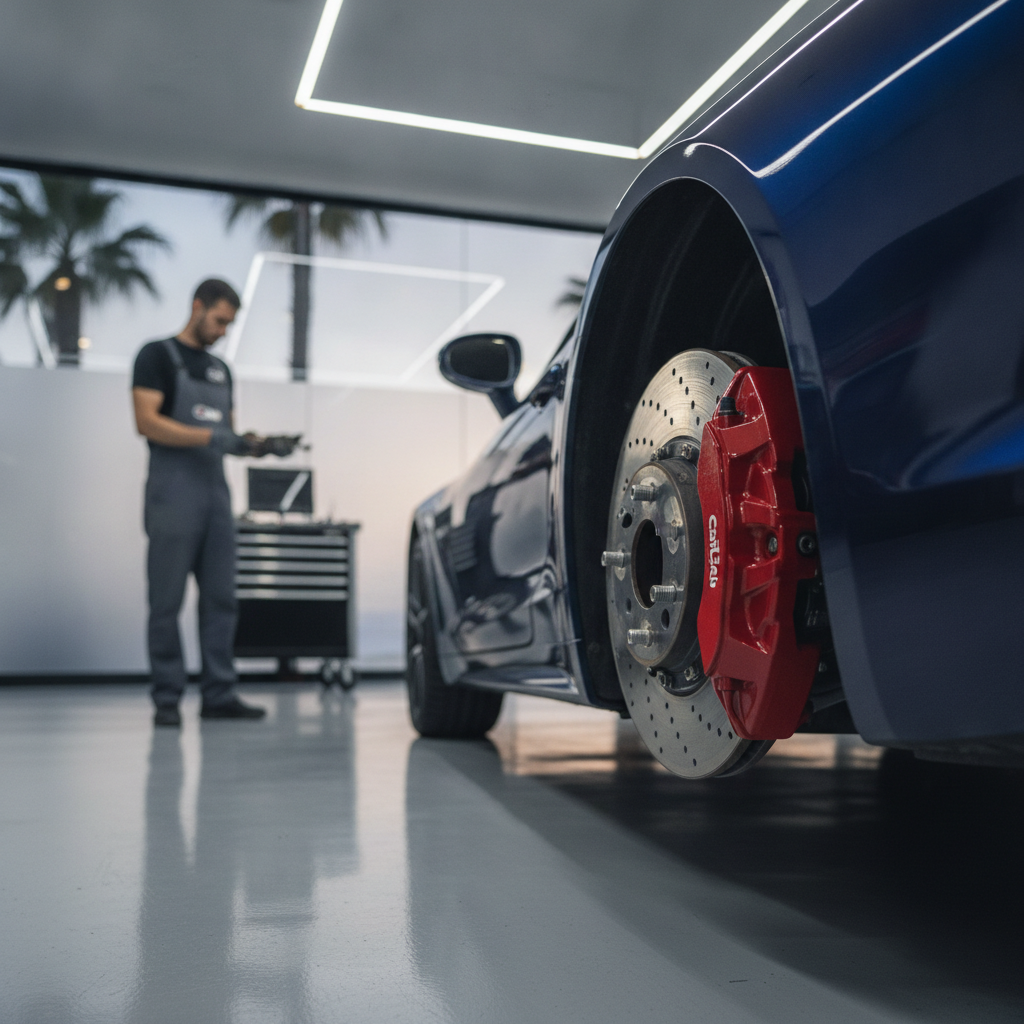
Marbella is synonymous with luxury, high-end lifestyles, and, most importantly for automotive enthusiasts, some of the finest supercars in the world. Whether you are cruising down the Golden Mile in a Ferrari, navigating the mountain passes toward Ronda in a Porsche, or showcasing a Lamborghini at Puerto Banús, your vehicle’s braking system is its most critical safety and performance component. Many of these elite machines come equipped with Carbon Ceramic Braking (CCB) systems, a technology derived from Formula 1 and aerospace engineering. However, owning such advanced hardware requires specialized knowledge. At Car Lab Marbella, we often receive inquiries on the best practices for maintenance, which is why we have developed this comprehensive guide on how to care for carbon ceramic brakes.
What Makes Carbon Ceramic Brakes Unique?
Before diving into maintenance, it is essential to understand what sets these brakes apart from traditional iron rotors. Carbon ceramic discs are composed of a mixture of carbon fibers and silicon carbide. This composite material is incredibly hard, lightweight, and resistant to extreme temperatures. Unlike traditional steel brakes, carbon ceramics do not "fade" under heavy use, and they can save up to 20kg of unsprung weight on a vehicle, significantly improving handling and steering response.
Because they are built for longevity—often designed to last the lifetime of the car under normal street use—many owners assume they are maintenance-free. This is a misconception. While they are incredibly durable, they are also brittle and sensitive to certain contaminants and physical impacts. Knowing how to care for carbon ceramic brakes properly will ensure they perform at their peak and prevent incredibly costly replacement bills.
How to Care for Carbon Ceramic Brakes: Essential Maintenance Tips
Maintaining a CCB system requires a different approach than standard brakes. Here are the primary pillars of care that every supercar owner in Marbella should follow:
1. Proper Cleaning and Chemical Awareness
One of the most common ways carbon ceramic rotors are damaged is through the use of improper cleaning agents. Many "acidic" wheel cleaners found in standard car washes can penetrate the porous surface of the ceramic material, leading to structural degradation. When cleaning your vehicle, ensure that only pH-neutral soaps are used. Avoid spraying cold water directly onto extremely hot rotors after a spirited drive, as the thermal shock, while less problematic than with iron, can still cause micro-stress in the composite material.
2. The Importance of Visual Inspections
Traditional brakes show wear through thickness depletion. Carbon ceramic brakes, however, wear through a process called oxidation. As the rotors get hot, the carbon fibers inside the disc slowly burn away. You might notice the surface becoming "rougher" or appearing to have small "pockmarks." If you see dark spots or a dull finish on the rotor surface, it is time to visit Car Lab for a professional inspection. We utilize specialized tools to measure the density and weight of the disc, which is the only true way to determine their remaining lifespan.
3. Guarding Against Physical Damage
While carbon ceramic discs are incredibly hard, they are also brittle. This means they are highly susceptible to "chipping." This usually happens during wheel removal or installation. A single accidental knock with a heavy alloy wheel can chip the edge of the rotor, necessitating a full replacement of the disc, which can cost thousands of Euros. Always ensure that your mechanic uses protective guide pins when removing wheels—a standard protocol here at Car Lab Marbella.
Bedding-In and Heat Management
If you have recently replaced your pads or rotors, the "bedding-in" process is vital. This involves a specific sequence of controlled stops to transfer a thin layer of brake pad material onto the rotor surface. Without this transfer layer, you may experience "brake squeal" or reduced stopping power. Furthermore, while CCBs love heat, they should be allowed to cool down gradually. After a high-performance session on the track or a fast run through the Andalusian hills, drive the last few kilometers at a steady pace without heavy braking to allow airflow to cool the system evenly.
For those interested in the deep technical specifications of these systems, Brembo’s official documentation on carbon ceramic technology provides excellent insights into why these materials require such specific thermal management.
When to Visit Car Lab Marbella
Living in a coastal environment like Marbella presents unique challenges. Salt air and humidity can occasionally affect the mounting hardware and sensors associated with your braking system. While the rotors themselves do not rust, the bells (the center part of the disc) and the calipers can accumulate grime that hinders performance.
At Car Lab, we provide a bespoke service for premium vehicles. Our technicians are trained to identify the subtle signs of carbon oxidation and pad crystallization. We recommend a dedicated brake inspection every 10,000 kilometers or before any track day event. Understanding how to care for carbon ceramic brakes is about proactive prevention rather than reactive repair.
Conclusion: Protecting Your Investment
Carbon ceramic brakes represent the pinnacle of automotive stopping technology. They offer a level of confidence and performance that is unmatched on the road. However, that performance comes with the responsibility of specialized care. By avoiding harsh chemicals, being mindful of physical impacts during tire changes, and monitoring for oxidation, you can enjoy the benefits of your CCBs for years to come.
If you are unsure about the condition of your brakes or if you have noticed a change in pedal feel or an increase in noise, do not hesitate to contact us. At Car Lab Marbella, we combine passion with precision to ensure your vehicle remains in showroom condition, both mechanically and aesthetically. Trust the experts who understand the nuances of high-performance engineering.